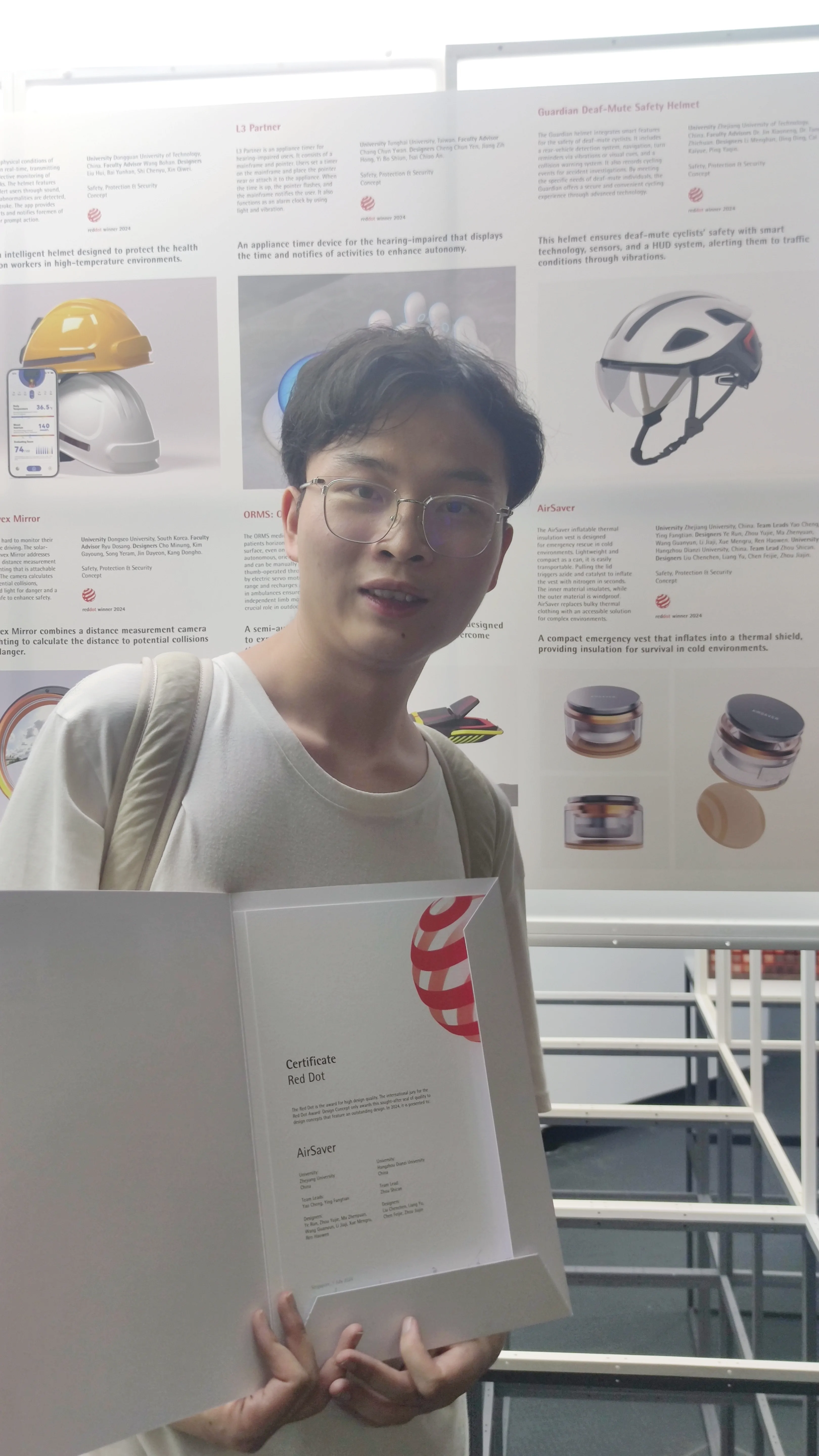
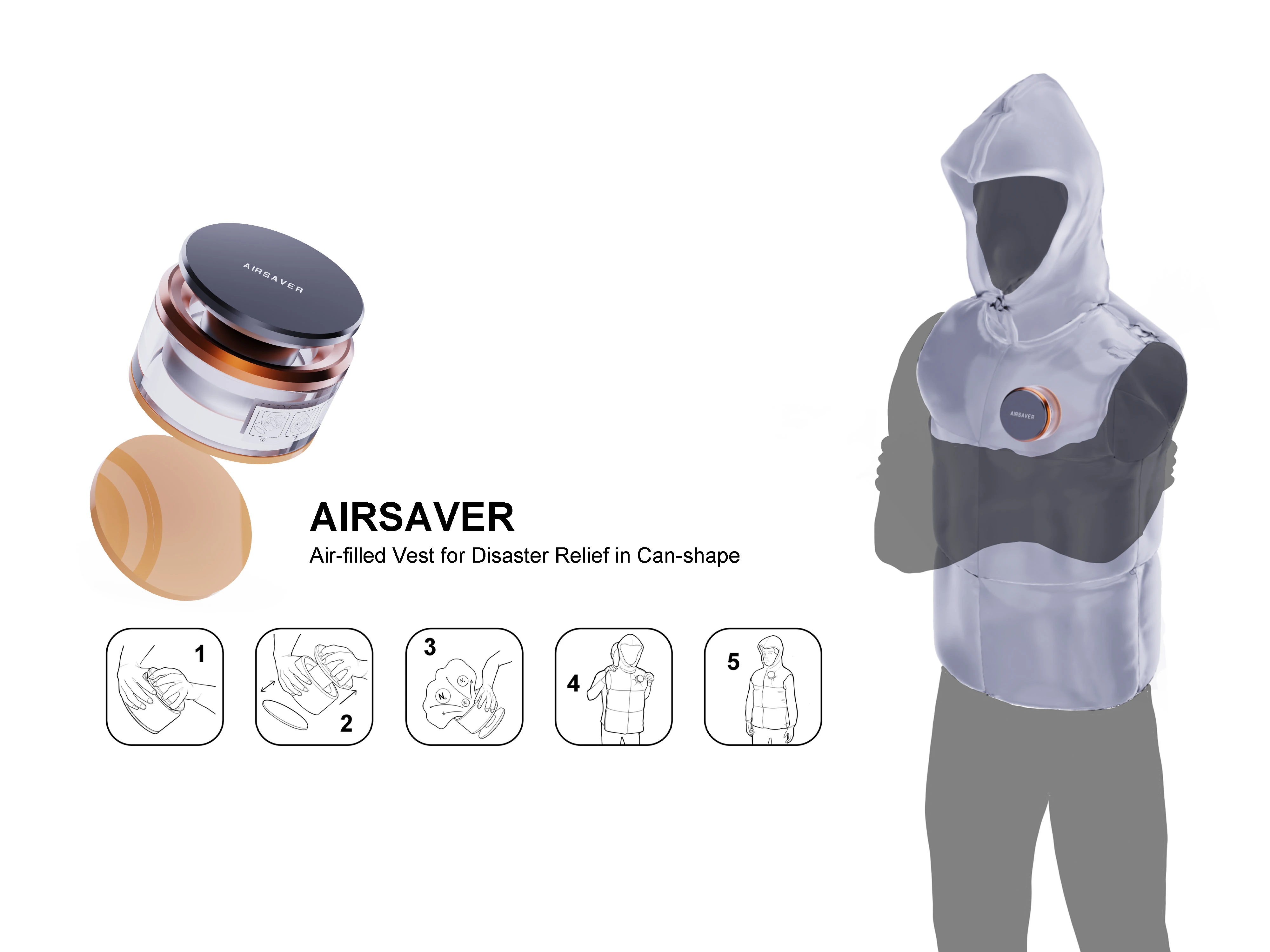
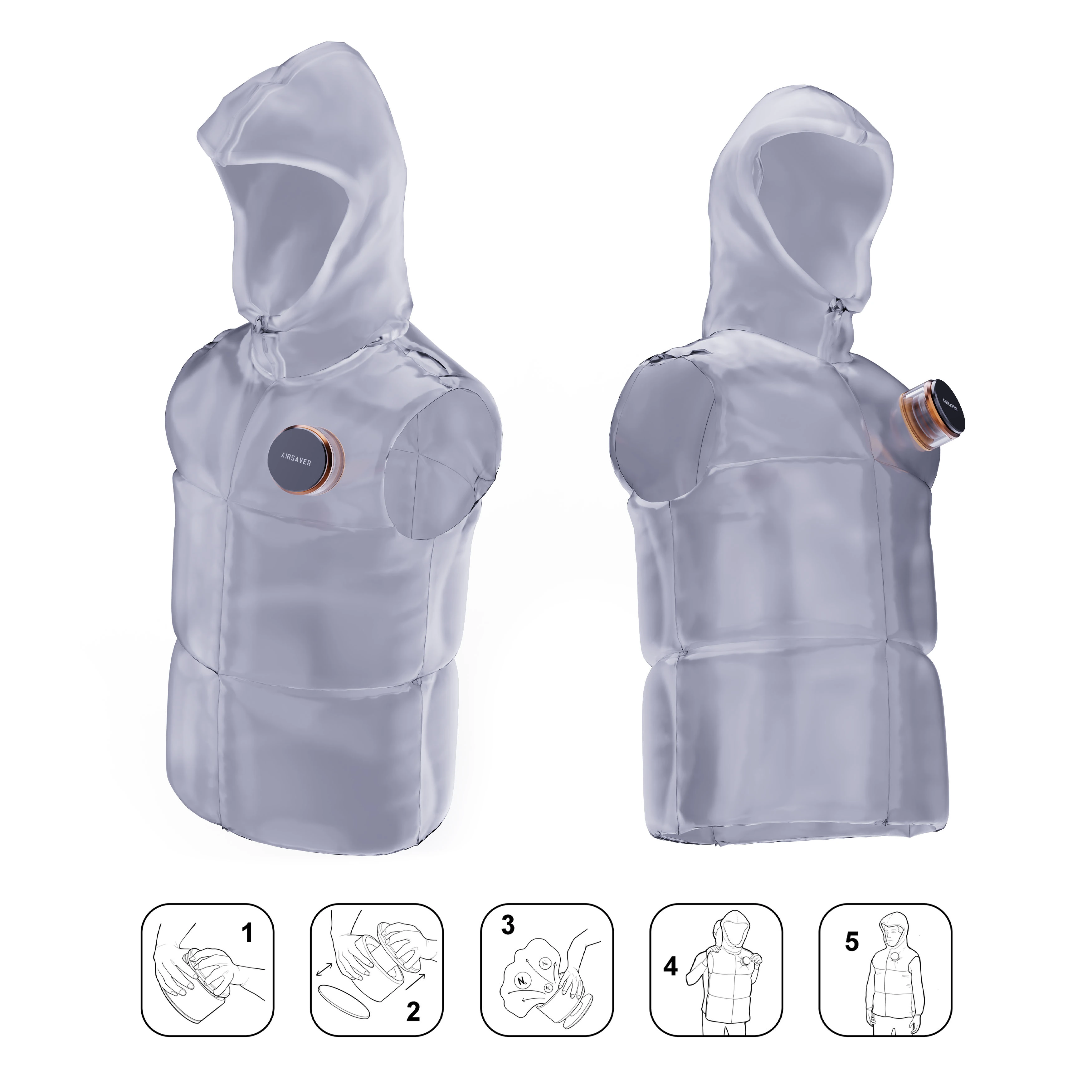
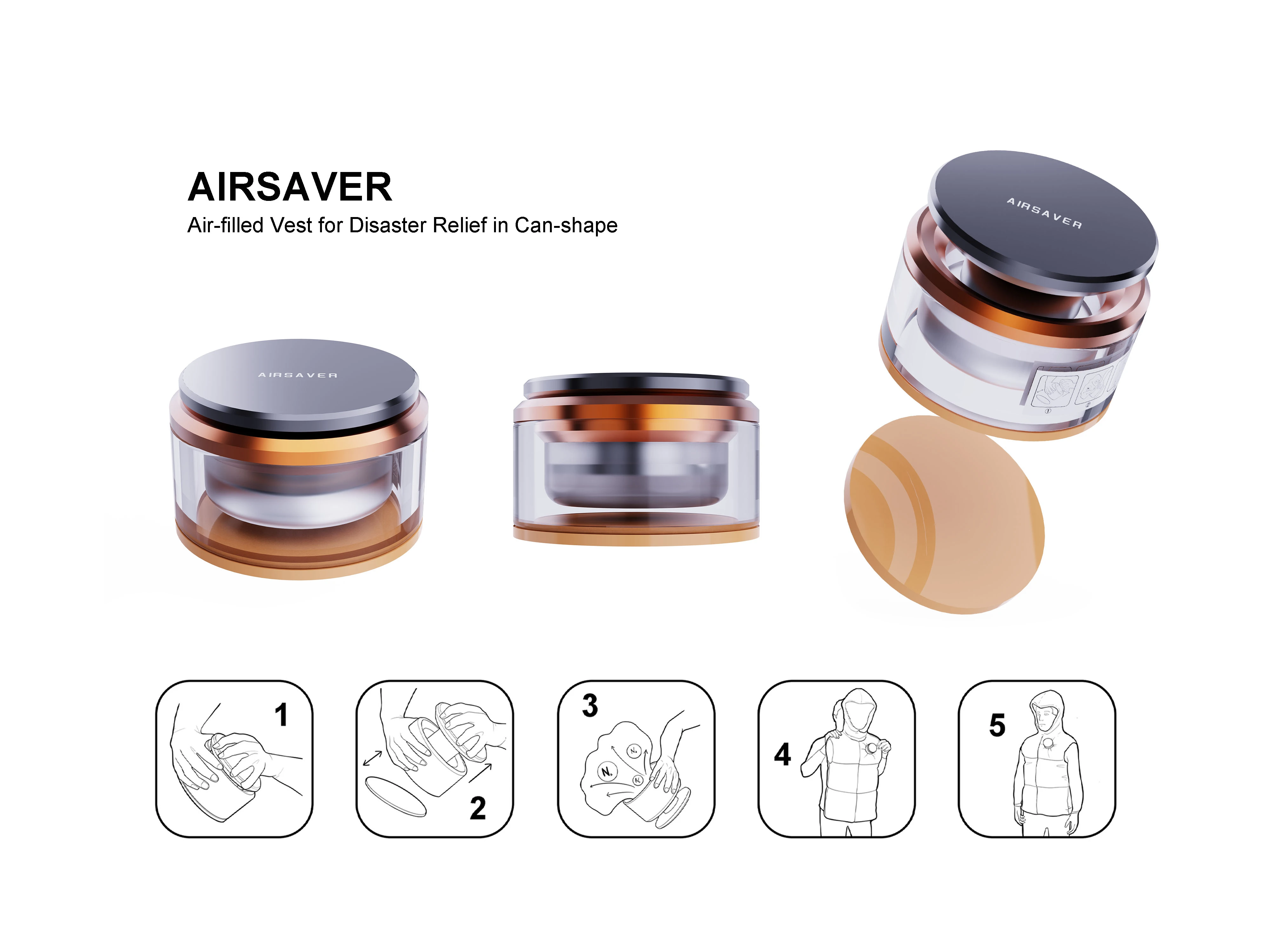
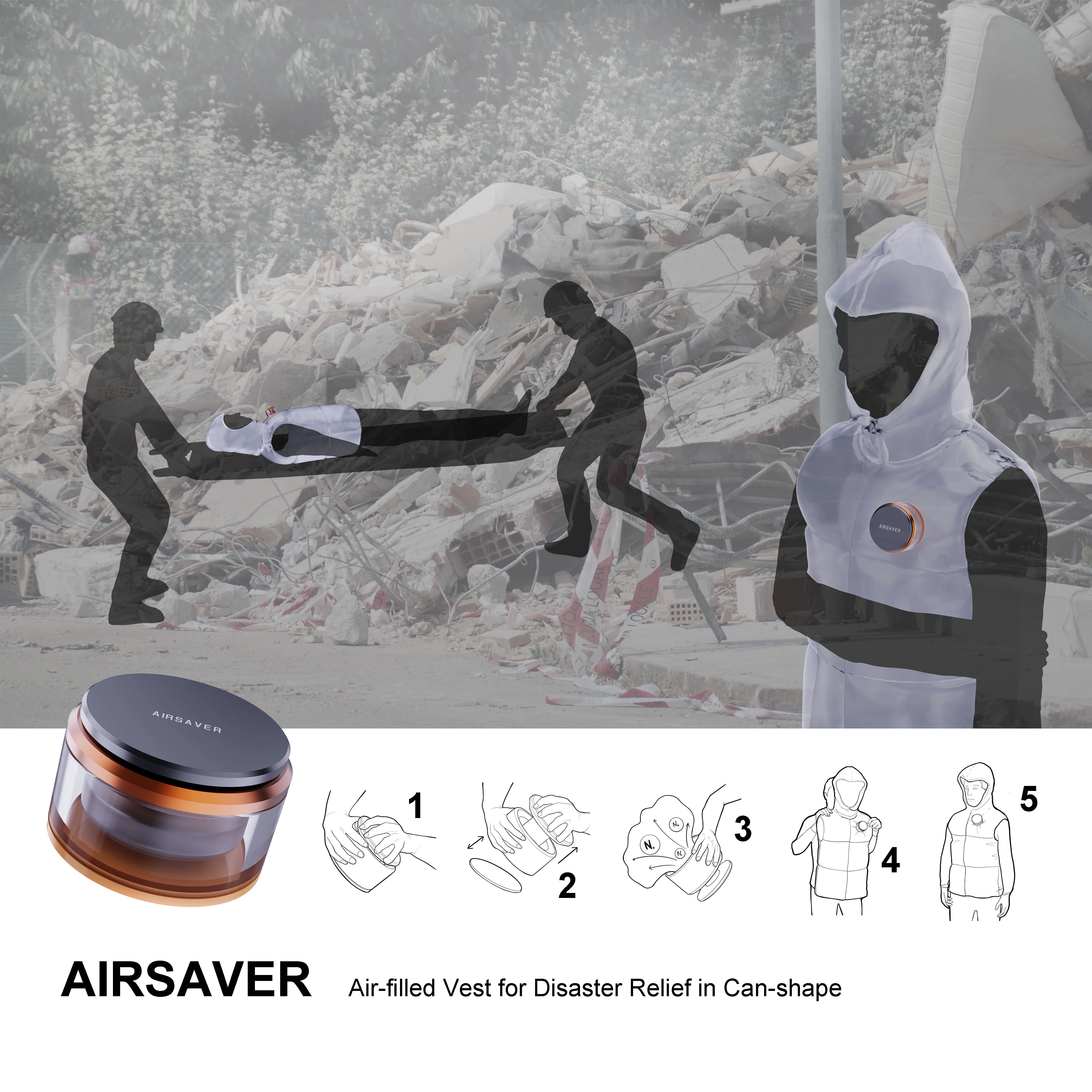
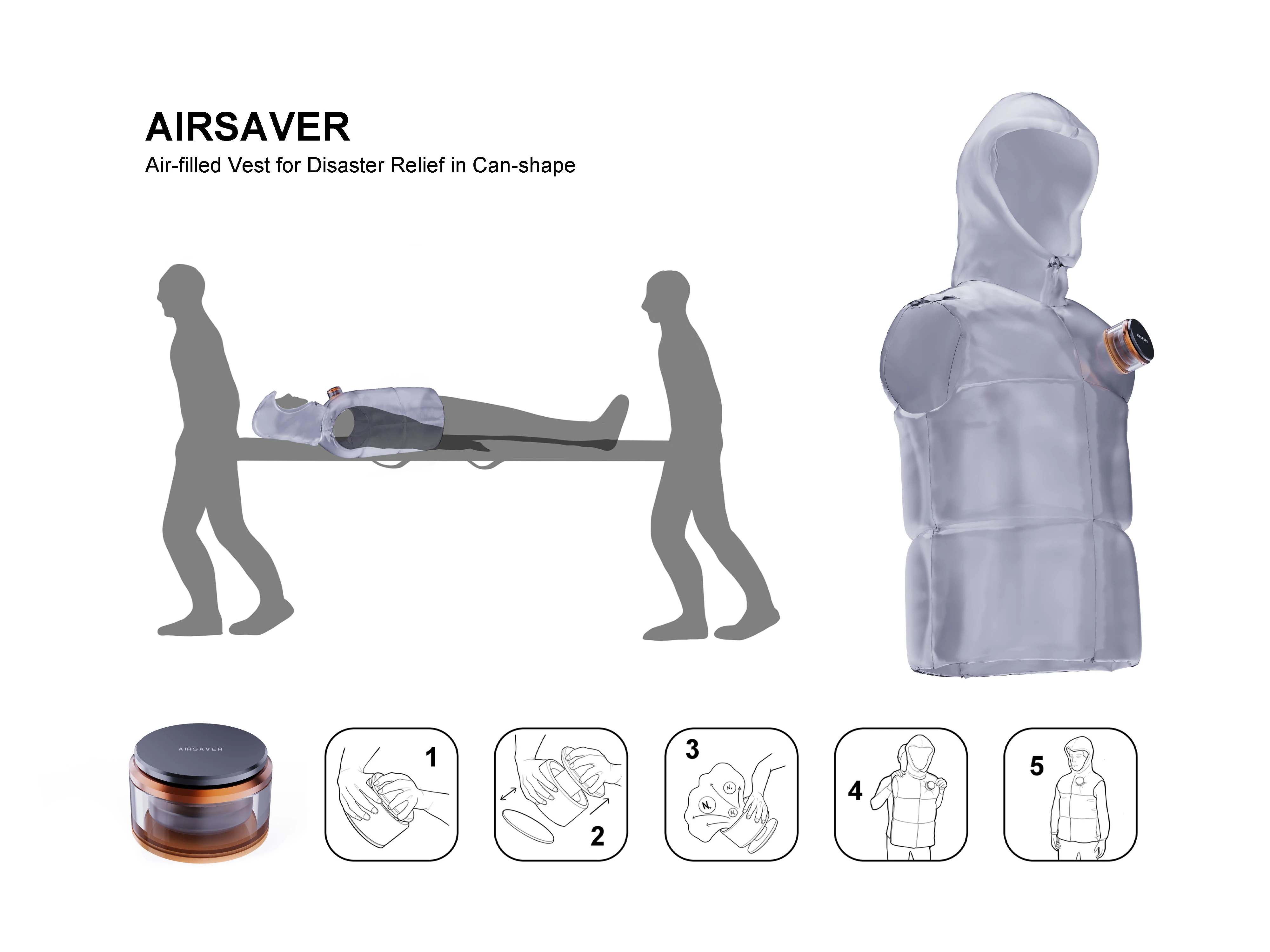
The AIRSAVER inflatable thermal insulation vest is designed for emergency rescue in cold environments. Lightweight and compact as a can, it is easily transportable. Pulling the lid triggers azide and catalyst to inflate the vest with nitrogen in seconds. The inner material insulates, while the outer material is windproof. AIRSAVER replaces bulky thermal clothing with an accessible solution for complex environments.
Background
AIRSAVER is an emergency-wear concept designed for cold-environment rescue, where the first minutes after exposure can be critical. In these scenarios, the challenge is not simply that survivors need insulation, but that insulating gear is often too bulky to deliver quickly into complex sites. Down jackets, padded coats, and other conventional warming garments may provide protection once they arrive, yet their volume and handling make them difficult to move rapidly under unstable, obstructed, or time-sensitive rescue conditions.
This project therefore reframes thermal protection from the perspective of rescue workflow rather than apparel convention. Instead of asking how to improve a jacket, AIRSAVER asks a more operational question: how can a warming device be made small enough to transport easily, simple enough to activate immediately, and clear enough to use under stress?
Design Challenge
The key contradiction in cold rescue is straightforward: the equipment that keeps people warm is often exactly the equipment that is hardest to transport quickly. AIRSAVER responds by treating portability as the first layer of protection. If thermal gear cannot arrive in time, its insulating performance matters less. Compactness, mobility, and immediate usability become part of the rescue function itself.
By shifting attention from garment thickness to deployment speed, the project identifies a more useful design direction for emergency scenarios: reduce storage volume first, then restore protective volume only at the moment of use.
Canned Form, Rescue Logic
The core proposal is to compress an inflatable thermal vest into a container that is as light and small as a can. This canned form is not a visual novelty for its own sake. It is a direct response to transportation difficulty in cold-disaster contexts. A can-sized package is easier to carry, easier to allocate, and easier to integrate into emergency supply systems than traditional thick clothing.
This shift also changes how the product is understood. AIRSAVER is not a normal piece of clothing waiting to be worn in advance. It is a deployable rescue unit: compact in storage, readable in form, and intended to provide warmth only when urgently needed.
One-Pull Deployment
The interaction is intentionally reduced to a single clear gesture. When the lid is pulled upward to the top position, the internal azide and catalyst are triggered, and the built-in compressed vest rapidly inflates with nitrogen within seconds. The user does not need a pump, a cable, or any additional external setup.
This matters because emergency interaction design is as much about clarity as it is about mechanism. Under stress, users benefit from actions they already understand. AIRSAVER therefore translates a relatively technical inflation process into a familiar movement that resembles opening a can, reducing hesitation and lowering the need for explanation.
The deployment sequence can be understood as four simple stages:
- transport the product in its compact canned state
- pull the lid to trigger inflation
- allow the vest to expand into wearable form within seconds
- put it on to regain basic thermal and wind protection
Thermal Structure
Once activated, AIRSAVER becomes a lightweight thermal vest with a layered protective logic. The inner material provides insulation to help preserve body heat, while the outer material is windproof to reduce additional heat loss in exposed environments. This inside-outside division gives the concept a practical functional structure rather than treating inflation as a visual effect alone.
In other words, the inflatable mechanism is not the end goal. It is the enabling step that turns an ultra-compact package into usable protection at the moment of need.
Scenario Value
AIRSAVER is most meaningful in situations where people need immediate thermal support before full rescue resources can be stabilized. Its value lies in bridging the gap between delayed delivery and urgent bodily need. Instead of replacing all conventional cold-weather equipment, the concept addresses a narrower but important window: the moment when compact transport and rapid warming matter more than long-term wear comfort or heavy-duty protection.
This makes the project especially relevant as a people-centered design response to complex rescue environments. The proposal prioritizes the rescued person’s immediate survival needs while also acknowledging the operational constraints of transport, handling, and deployment.
Project Positioning
AIRSAVER is a rescue-oriented wearable concept rather than a conventional garment. Its focus is the relationship between compact transport, immediate activation, and fast thermal protection, showing how wearable design can be reframed as deployable emergency equipment for cold-environment rescue.