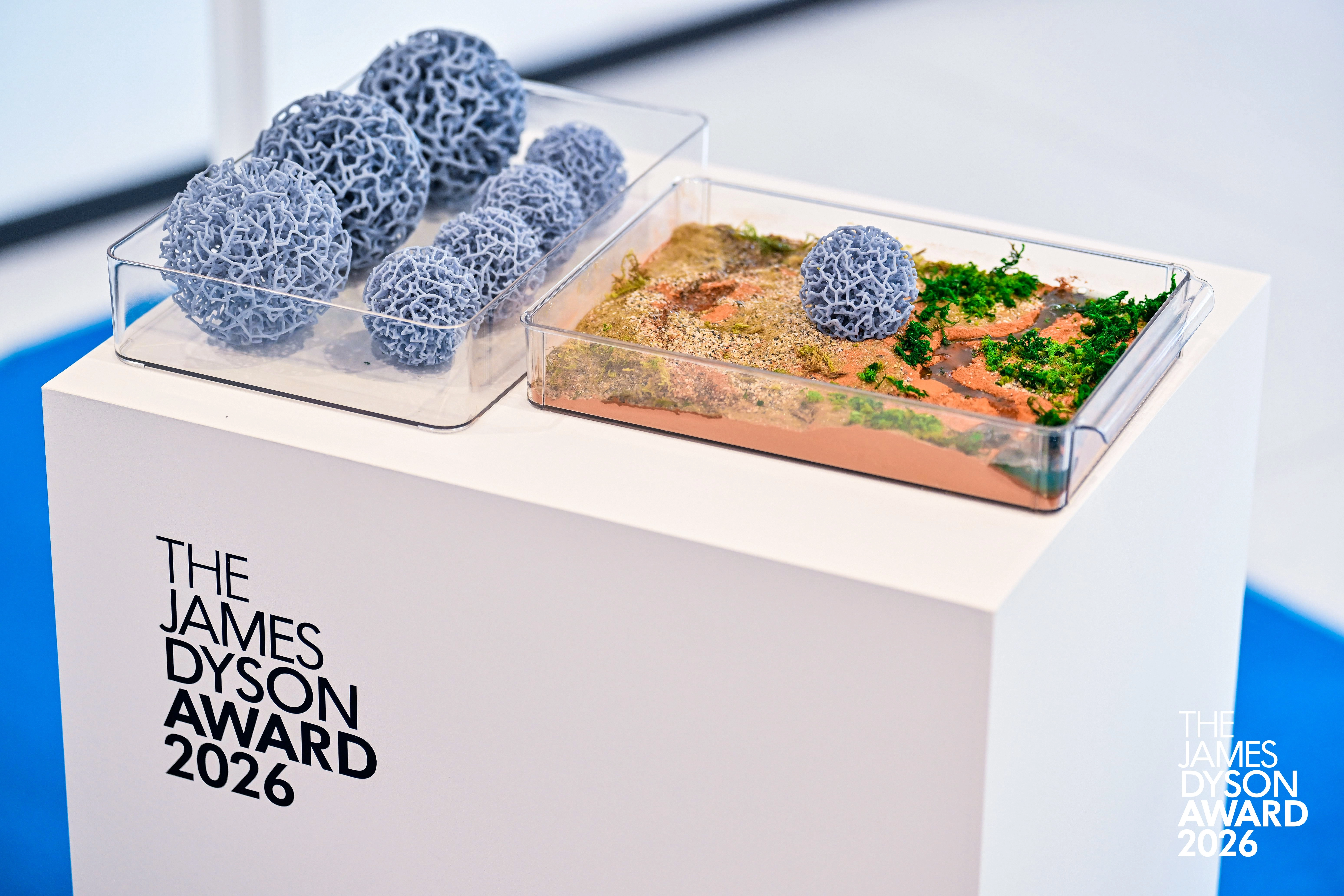
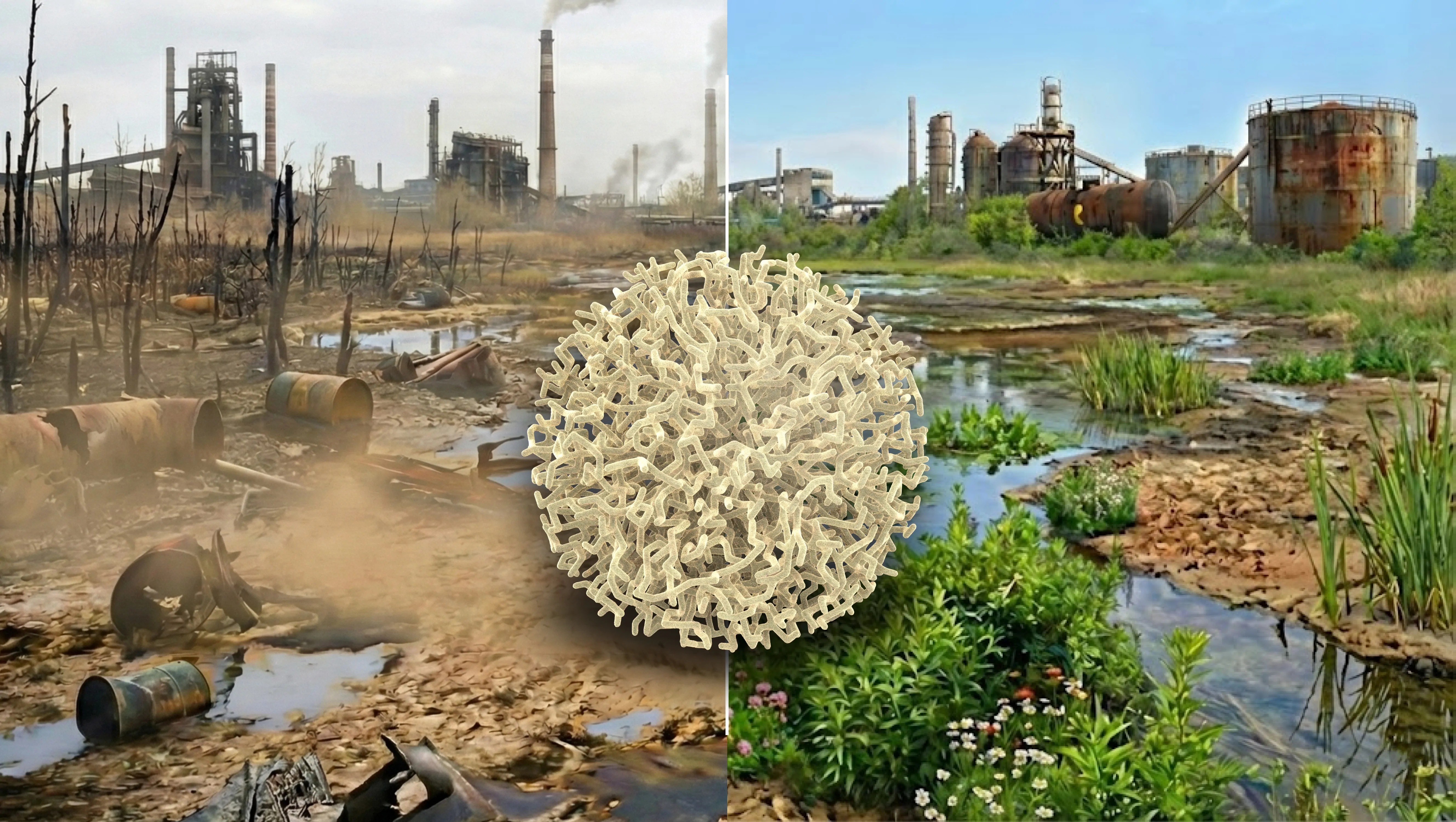
Biosyntax Vanguard utilizes wind-driven, DLA-generated tumbleweeds as programmable physical logic gates. The stimuli-responsive shell encapsulates a quiescent bio-payload, degrading only upon contact with specific pollutants (e.g., low pH, hydrocarbons). This triggers the precise release of microbes for in-situ metabolic remediation, ultimately decomposing for trace-free Ecological Restoration.
“Biosyntax Vanguard” redefines ecological restoration as “Environmental Debugging.” The system deploys a swarm of 3D-printed “Bio-Logic Tumbleweeds” generated via the Diffusion-Limited Aggregation (DLA) algorithm. Their lightweight, complex biomimetic form allows strictly wind-driven autonomous cruising across degraded landscapes, maximizing pollutant contact probability. Functioning as an electronics-free physical sensor system, the Biosyntax Vanguard integrates a stimuli-responsive polymer matrix (a physical logic gate) with a customized Bio-ink Payload, creating a vessel capable of harboring microorganisms. Addressing four distinct threats, the design strictly adheres to the protocol: “IF Environmental Trigger, THEN Release Payload”. Only when the Biosyntax Vanguard contacts specific markers—such as low pH, hydrocarbons, neurotoxins, or specific humidity patterns—does its polymer shell undergo pre-programmed structural change (e.g., dissolution or swelling) and degradation. This physical deformation instantly releases the “Quiescent Bio-Payload,” activating bacteria or fungi for in-situ remediation via metabolic degradation, induced mineralization, and other methods. Upon task completion, the Biosyntax Vanguard completely degrades, achieving true Trace-free Ecological Restoration.
Ecological Premise
Biosyntax Vanguard begins from the observation that many damaged landscapes fail long before vegetation disappears. In acidified mine tailings, oil-contaminated ground, pesticide runoff zones, and desertified surfaces, the more immediate breakdown often happens in the underlying “life infrastructure”: pH balance, microbial activity, substrate stability, and local moisture conditions. The project therefore frames ecological restoration as a prior act of environmental conditioning. Instead of directly introducing mature ecological forms, it proposes temporary agents that help re-establish the conditions under which later biological succession can take hold.
Bio-Logic Tumbleweeds
The carrier is conceived as a field of wind-driven “Bio-Logic Tumbleweeds.” Their form is generated through Diffusion-Limited Aggregation (DLA), producing lightweight branching geometries with a high surface-area-to-volume ratio. This morphology is not only a visual reference to tumbleweeds; it also serves an operational role. The open lattice increases drag, improves the probability of wind-driven rolling, and creates repeated points of contact with soil, puddles, sediments, or polluted surface films. Because the units are electronics-free and battery-free, movement is delegated to terrain and weather rather than motors or infrastructure, allowing the system to be imagined as a distributed remediation layer rather than a fixed machine.
Logic-Gated Release
At the center of the project is a physical interpretation of the rule “IF Environmental Trigger, THEN Release Payload.” Each unit combines a stimuli-responsive shell with an internal Quiescent Bio-Payload. The shell functions as a material logic gate: it remains stable during transport, but when it encounters a target signal such as low pH, hydrocarbons, organophosphate residues, or a specific hydration condition, it undergoes a programmed transformation such as swelling, dissolution, rupture, or gradual degradation. This structural change opens the carrier and localizes release to the affected site rather than dispersing remediation agents indiscriminately across the landscape.
The payload is designed to stay dormant before activation. In this state, microorganisms or related bioactive components can be transported as sealed ecological potential rather than continuously active matter. Once the shell is triggered, the payload is exposed to local conditions and can begin in-situ action through metabolic degradation, mineralization, detoxification, or substrate formation, depending on the gate type. The shell itself is also designed to break down over time, so the device acts as a temporary mediator rather than a permanent artifact.
Gate Families
Neutralization Gate
The Neutralization Gate is oriented toward acidic mine drainage and heavy-metal-associated environments. A shell based on chitosan and calcium carbonate microparticles is intended to respond to low-pH conditions, gradually dissolving while releasing alkaline buffering material. In parallel, the payload can incorporate Sporosarcina pasteurii, a microorganism associated with Microbially Induced Calcium Carbonate Precipitation (MICP). Through localized mineralization, this gate is conceived to help stabilize the surrounding microenvironment and reduce the mobility of certain dissolved contaminants.
Lipophilic Expansion Gate
The Lipophilic Expansion Gate addresses hydrocarbon leakage and oil-polluted surfaces. Its shell can be configured with a porous oleophilic matrix, such as a styrene-butadiene-styrene (SBS) copolymer-based structure, that swells or opens upon contact with oily compounds. That change releases a payload linked to hydrocarbon metabolism, represented here by Rhodococcus erythropolis. In this configuration, the gate couples pollutant recognition with localized biodegradation, concentrating microbial action where oil films or hydrocarbon residues are actually present.
Enzymatic Detox Gate
The Enzymatic Detox Gate is aimed at organophosphate pesticide runoff. Here the trigger layer is imagined as an aptamer-functionalized hydrogel capable of recognizing specific chemical cues from the target pollutant. Once activated, it releases Pseudomonas putida or an associated enzymatic system for bond cleavage and detoxification. Rather than treating agricultural pollution as a uniform field condition, this gate model focuses on selective response, allowing release to occur only when the relevant molecular signal is detected.
Hydration Crust Gate
The Hydration Crust Gate is designed for arid and desertifying terrains where surface instability and water loss prevent recovery. A sodium alginate / PEG-DA hydrogel scaffold can remain inert during dry transport and then soften under rare rainfall or localized humidity. This transition releases Microcoleus vaginatus and related biocrust-forming potential into the surface layer. As cyanobacterial activity develops, the system is intended to support extracellular polymer production, sand-grain binding, and the early formation of biological soil crusts that reduce erosion and improve moisture retention.
Deployment Lifecycle
The overall workflow can be understood as a staged environmental interaction rather than a one-time drop:
- Wind dispersal moves the units across open or degraded terrain.
- Repeated contact increases the chance of encountering a relevant pollutant or microclimatic condition.
- A specific environmental trigger transforms the shell and opens the gate.
- The Quiescent Bio-Payload is released locally and begins in-situ remediation.
- The carrier gradually degrades, leaving the site to longer-term ecological processes.
This sequence is important to the project because it shifts remediation from centralized intervention to distributed conditional response. The unit does not attempt to remediate everywhere at once; it waits, senses through material behavior, and acts only where the local environment matches its programmed logic.
Deployment Contexts
Biosyntax Vanguard is structured for fragmented and difficult-to-access settings where conventional ecological restoration is costly, spatially uneven, or logistically slow. The project maps this framework onto four representative contexts: acidic mining landscapes, hydrocarbon-contaminated industrial ground, agricultural runoff corridors, and desert margins vulnerable to surface erosion. Across these scenarios, the same design language is maintained while the gate chemistry, payload, and environmental trigger are reconfigured. In that sense, the project is less a single object than a modular restoration syntax: a repeatable way of pairing morphology, trigger condition, and biological action within one distributed ecological system.
Exhibition ( The JAMES DYSON AWARD 2026 )