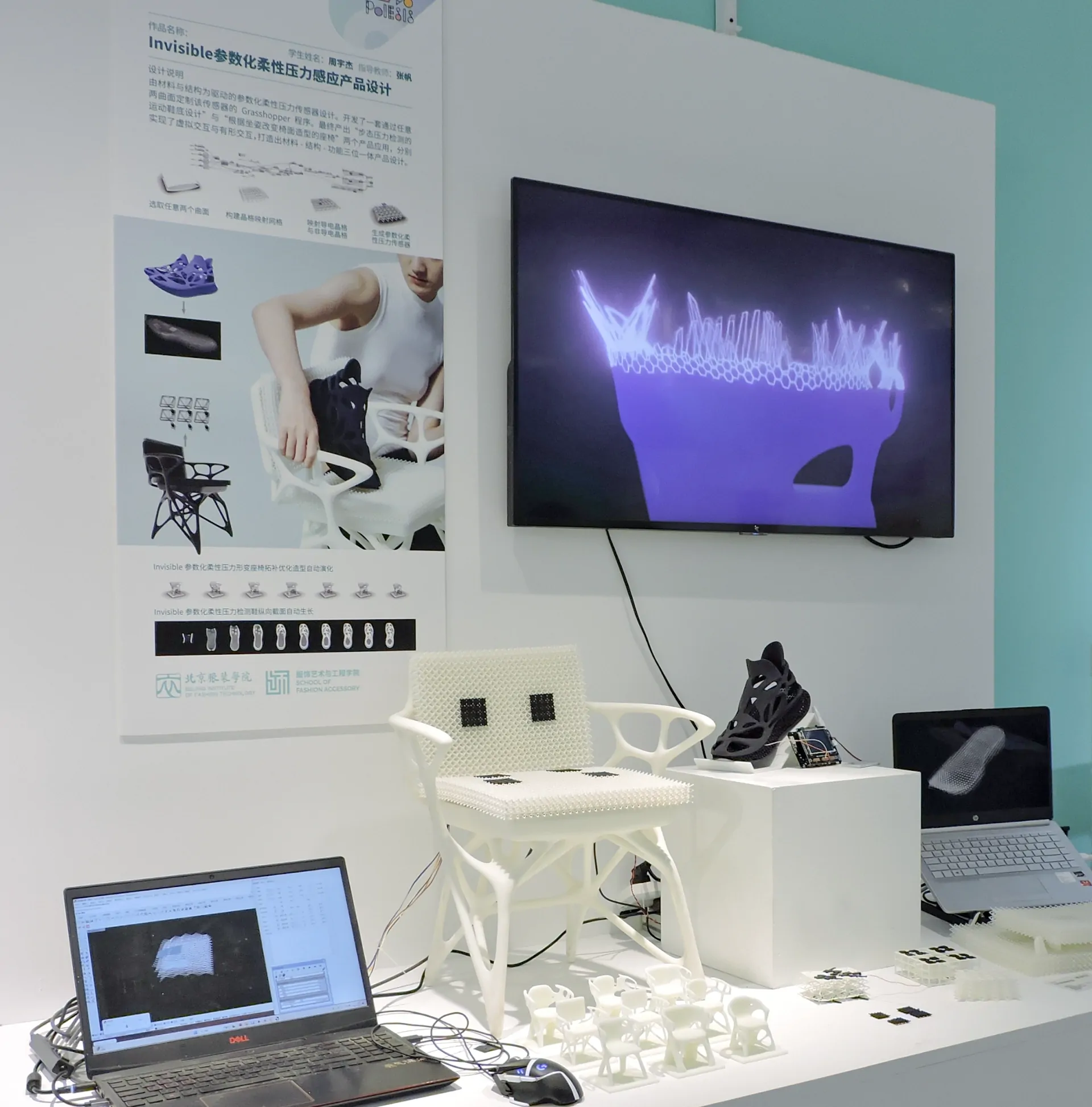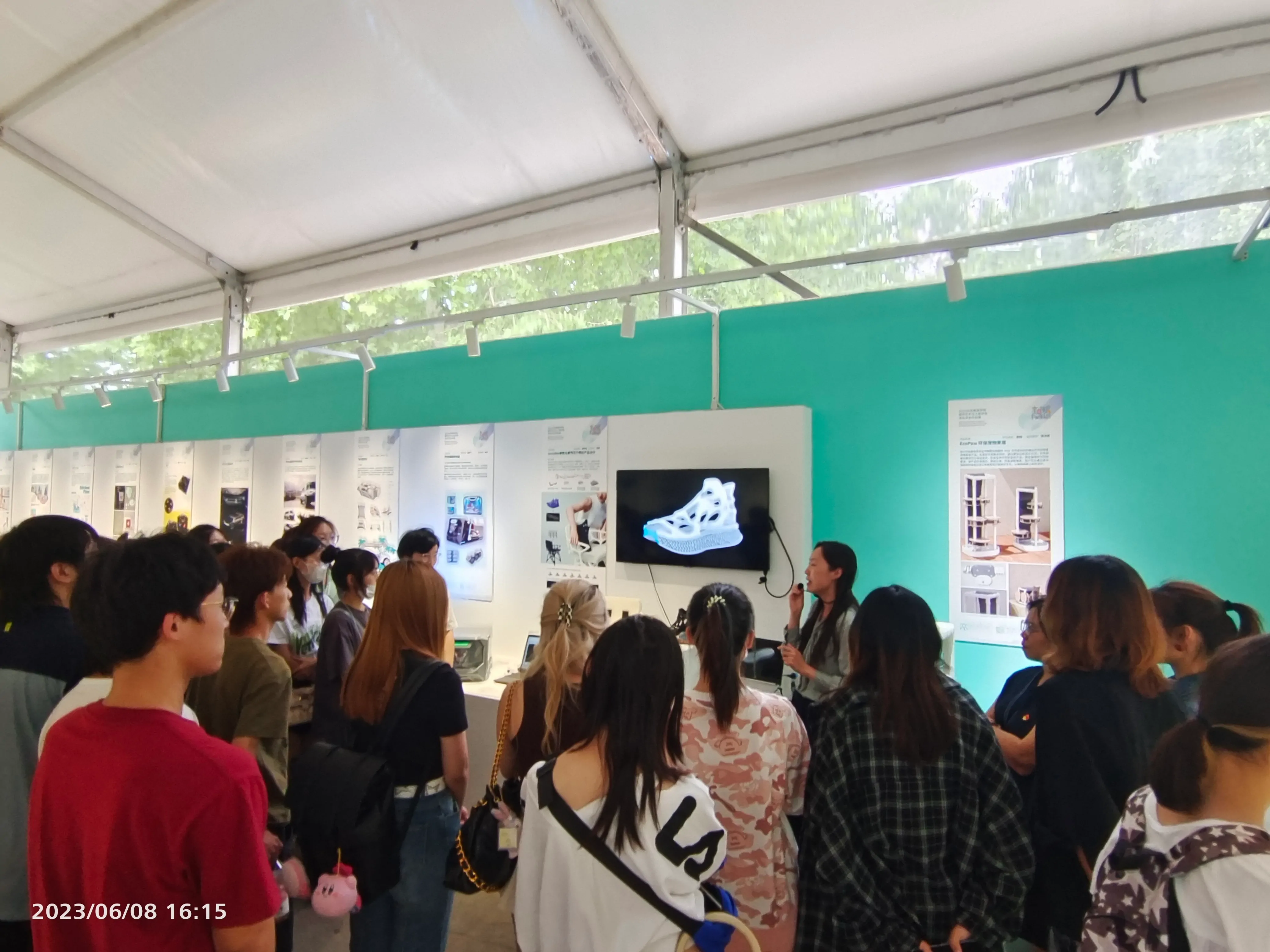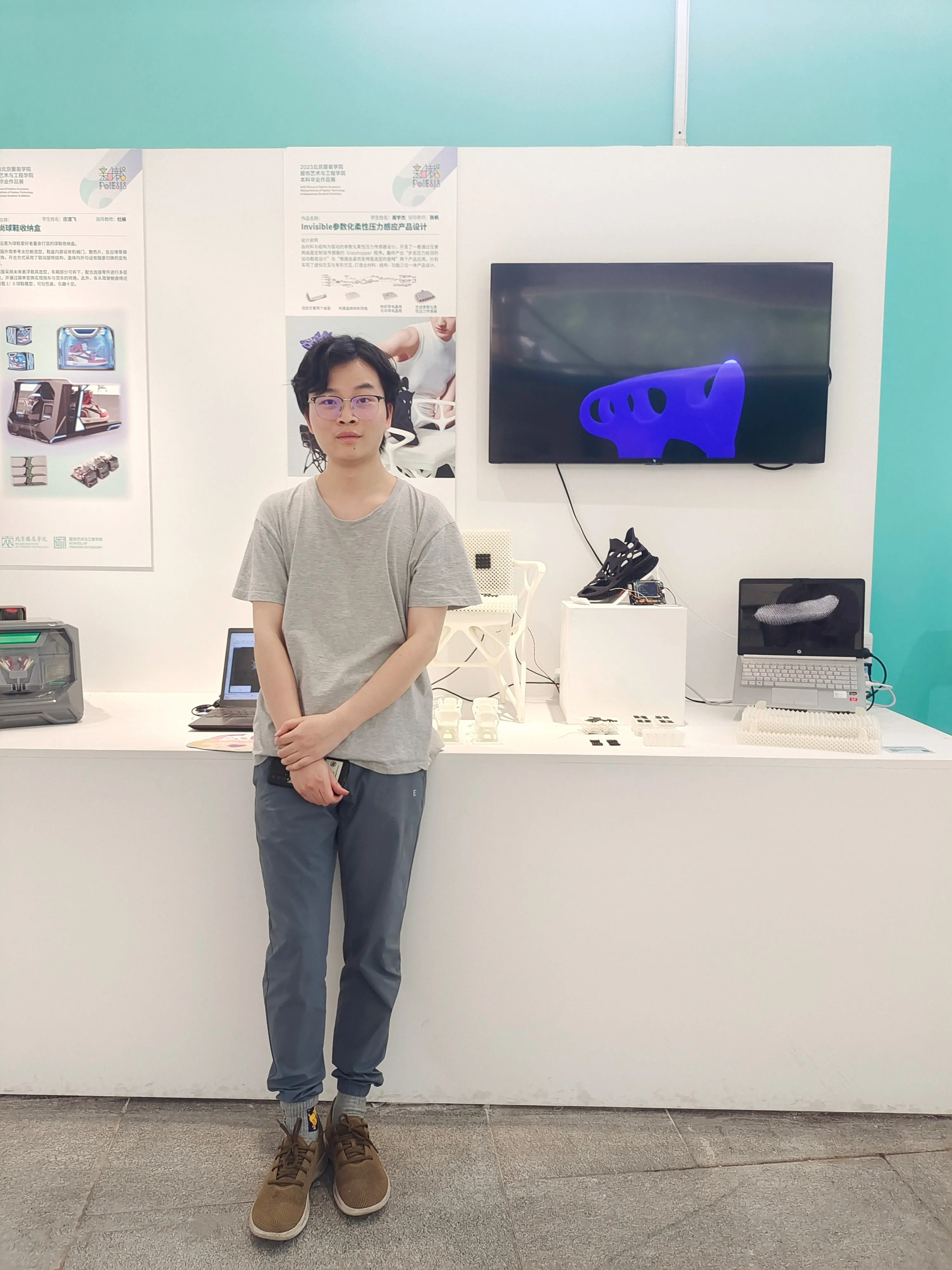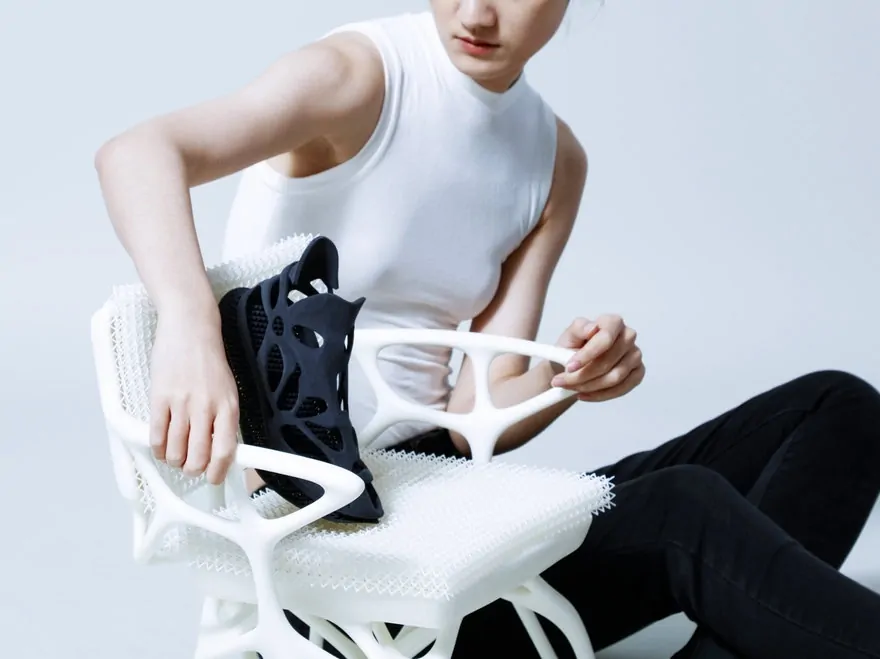
Invisible is a pressure-sensing design project that combines flexible parametric structures, conductive materials, and multi-material integrated 3D printing. Instead of attaching off-the-shelf sensors onto a finished product, we embed the sensing function directly into the parametric lattice itself, allowing the structure to simultaneously perform as form, support, and sensor. Compared with conventional rigid pressure sensors, this approach is softer, more customizable, and better integrated with product form and interaction.
Background
Traditional pressure sensors are usually rigid or membrane-based. In product practice, this often means the sensing unit is added only after form-making is complete, which separates interaction from structure, limits aesthetic freedom, and reduces comfort in body-contact scenarios. Invisible began as a bachelor’s thesis and graduation design project built around a different question: what if the pressure sensor is not an attached part, but a flexible parametric structure generated together with the product itself?
Mechanism
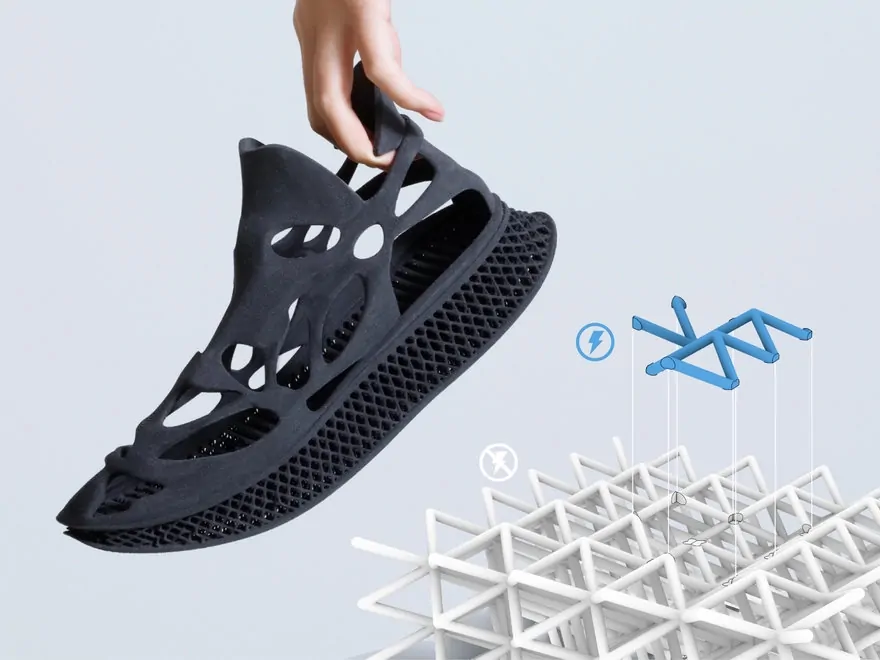
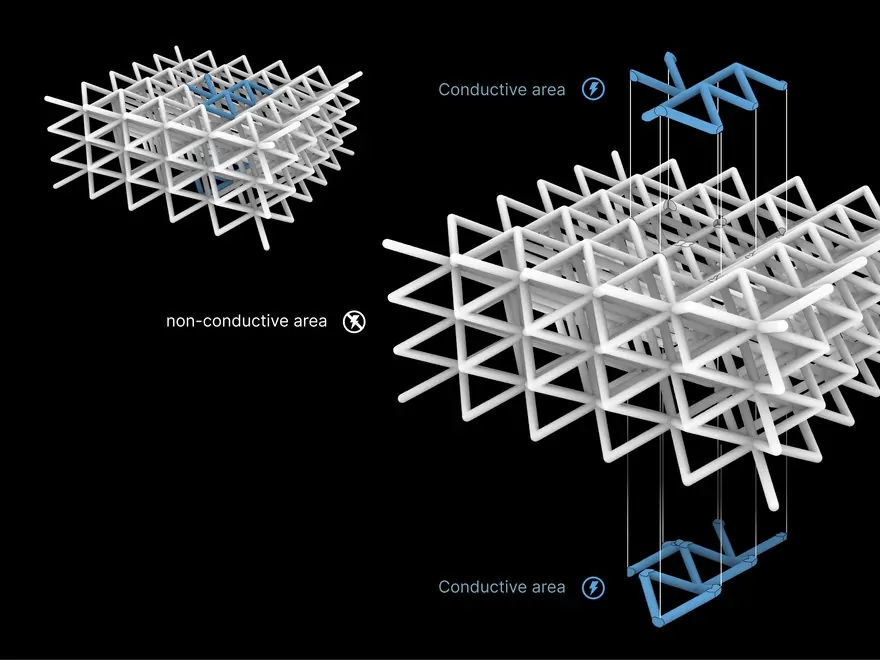
Invisible uses a sandwich-style capacitive pressure-sensing structure. Upper and lower conductive regions are embedded into a non-conductive flexible lattice so that deformation directly changes the spacing between the conductive layers and therefore changes capacitance. Instead of treating support, cushioning, and sensing as separate systems, Invisible lets one generated lattice perform all three roles at once.
To stabilize both elasticity and sensing behavior, the system uses two complementary unit-cell logics: a lower-fill non-conductive lattice for deformation and recovery, and a denser conductive cell for forming stable capacitive overlap. This turns the lattice from a visual style into a measurable interaction mechanism.
Design and Fabrication
To make the sensing structure adaptable to different products, a Grasshopper-based generation program was developed. Designers can select two target surfaces, generate a lattice mapping grid between them, and then control three variables through a lightweight interface: the XYZ grid density, the position and number of conductive groups, and the size of each sensing zone. This makes it possible to customize flexible pressure-sensing structures for irregular surfaces within minutes rather than rebuilding geometry manually each time.
The fabrication workflow combines geometry generation with material separation. After lattice generation, Dandro and Boolean operations are used to split conductive and non-conductive regions into manufacturable parts. In process development, SLS, FDM, and SLA routes were compared, and the final workflow adopted a hybrid approach: SLS for the non-conductive TPU lattice and FDM for the conductive TPU regions. An earlier conductive-ink approach on SLS parts was abandoned because rough surfaces caused unstable adhesion and inconsistent initial capacitance, so the final hybrid material workflow became a key turning point in the project.
Validation
After fabrication, the structure was tested through pressure-capacitance experiments using an LCR meter and a lightweight STM32F303-based capacitance-reading module. The sample showed a clear and usable capacitance change from about 16 pF to 172 pF, with a relative change rate of about 9.75. These tests confirmed that the lattice was not only formally expressive and flexible, but also capable of producing stable sensing data that could be read and translated into interaction.
Concept
Invisible is a parametric capacitive flexible pressure sensor crafted through a 3D printing process that combines conductive and non-conductive materials. This sensor seamlessly integrates into the parametric structure and overall product design, offering a perfect blend of customization and integration. This user-friendly approach caters to the convenience of designers and developers.
The key value of the project lies in three aspects. First, it supports rapid customization and generation, allowing sensing structures to be quickly adapted to different surfaces and interaction requirements. Second, it aligns well with digital fabrication and enables fast processing and production through multi-material printing. Most importantly, it establishes an interaction between material and parametric structure, making pressure sensing an integrated outcome of structure and function rather than an added module.
Application
Gait Pressure Detection Sports Shoes
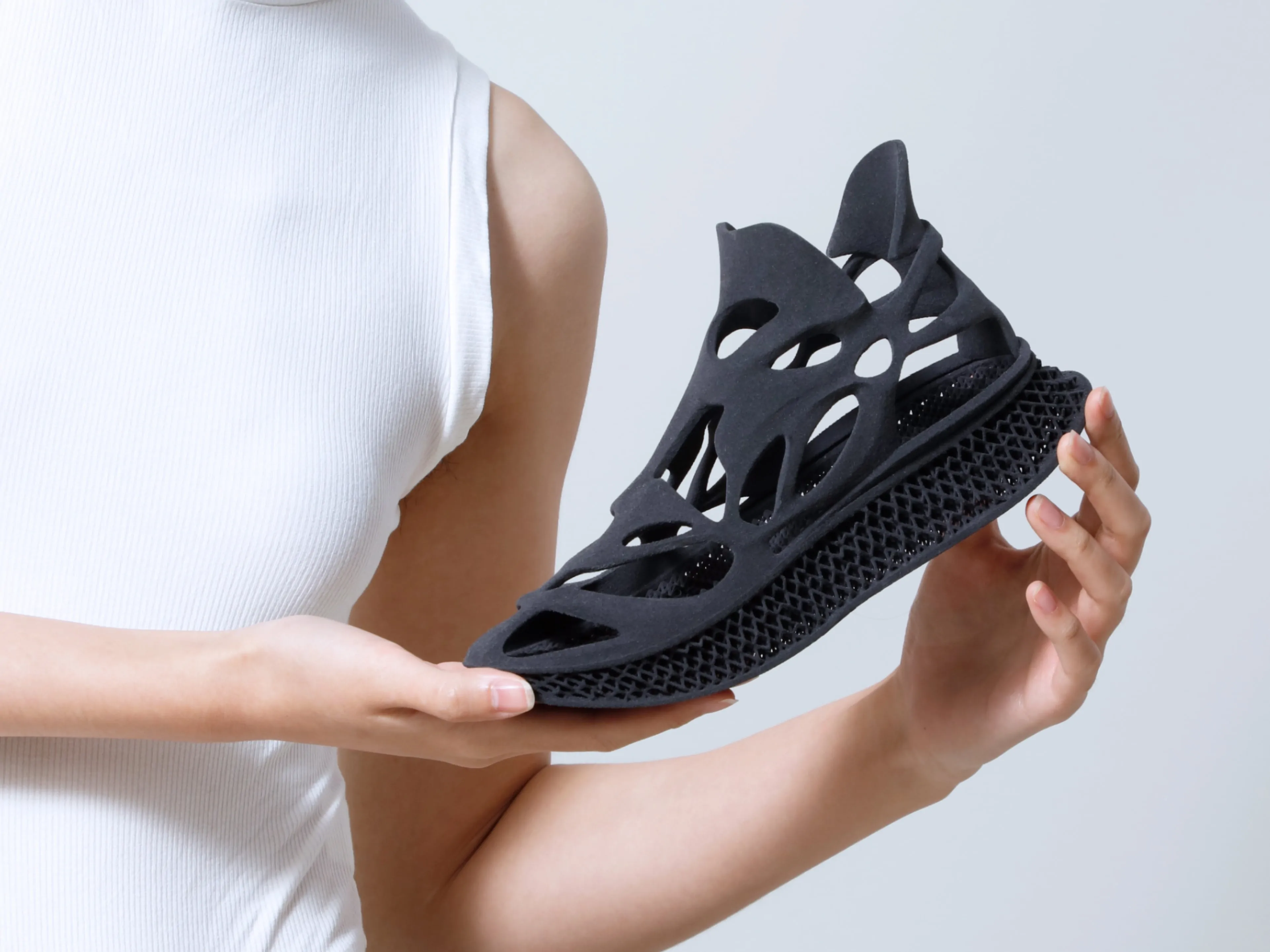
In the sports shoe application, the flexible pressure-sensing structure becomes part of the sole itself. The exploration focuses on the forefoot, where pressure concentration and injury risk are both high, and arranges four groups of 4 x 4 conductive regions, with each sensing area measuring about 2.5 cm x 2.5 cm. This keeps the sole soft, breathable, and integrated while still allowing real-time sensing.
To make the data legible, TouchDesigner is used to transform pressure-capacitance signals into a continuously deforming point-cloud shoe model. Instead of showing pressure as abstract numbers only, the system gives users and clinicians a more intuitive visual record of gait changes, making the concept relevant to sports analysis, rehabilitation, and customized footwear design.
Adaptive Human Posture Chair
In the chair application, the same sensing structure is connected to a responsive output system. Using Ameba topology optimization, multiple chair body candidates were generated and screened under structural loading conditions, and the final form was developed around pressure support logic rather than a fixed seat geometry. Six sensing regions were embedded across the seat and back, while the prototype integrated airbags, a micro air pump, and solenoid valves to compensate for low-pressure areas around the lumbar and sitting-bone zones.
The interaction loop is simple but powerful: the chair reads stable capacitance data, identifies under-supported areas, inflates the corresponding airbag, maintains the adjusted state, and then begins another round of sensing and correction. In this application, Invisible moves beyond pressure detection and becomes part of an adaptive support system, shifting the relationship from “people adapt to chairs” toward “chairs adapt to people.”
Why It Matters
Invisible is not only a flexible pressure-sensing structure, but also a design method that merges computational generation, material logic, fabrication workflow, and interaction output into one system. By embedding sensing directly into the lattice, the project shows that pressure input can become part of form, cushioning, and structural behavior rather than an added module.
This approach opens up softer and more customized interactive products for body-contact scenarios such as footwear and seating. It also demonstrates how a single parametric system can scale from material experiment to product application without separating structural design from sensing design.
Additional Views