
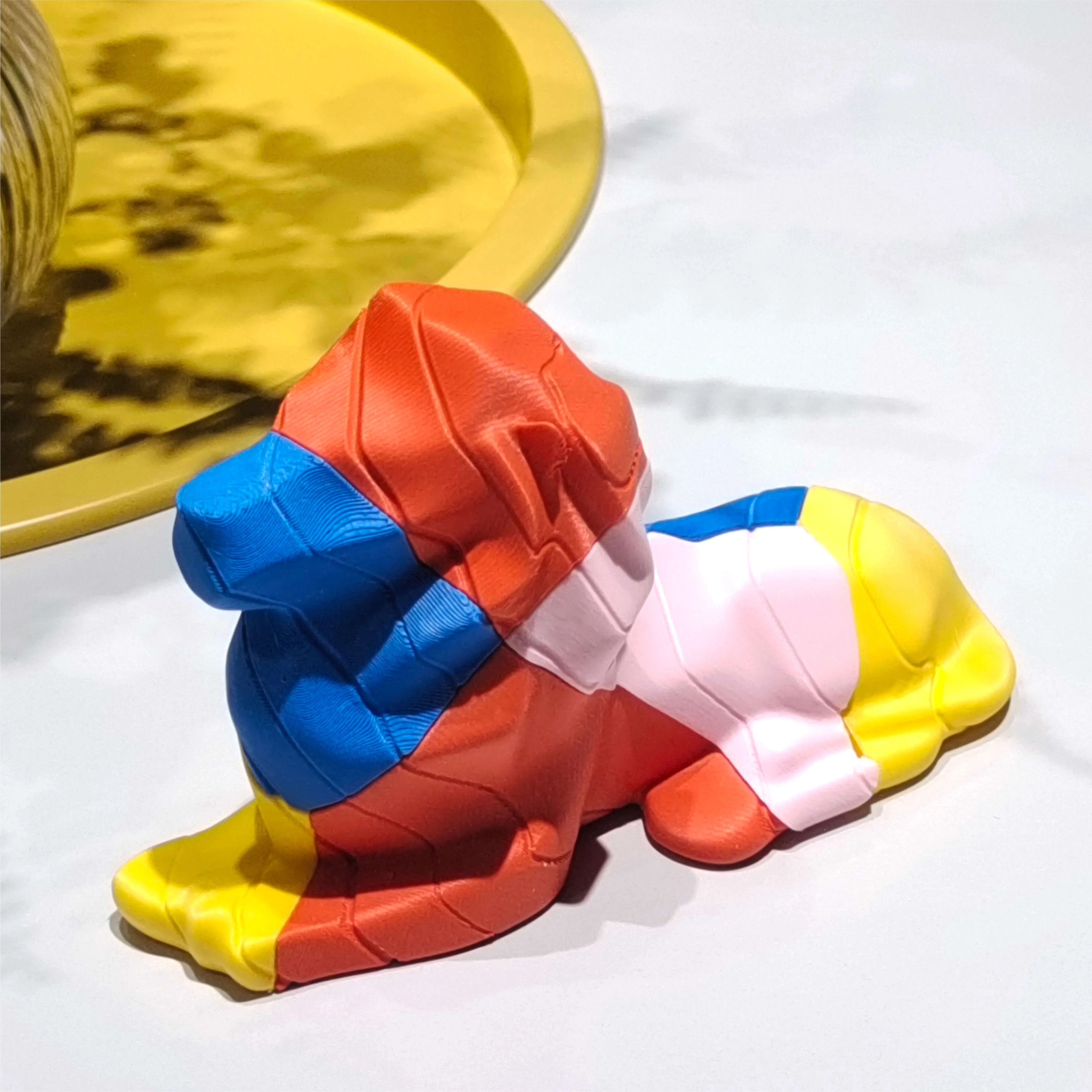
FlowBlock is a modular 3D-printed tactile toy for inclusive play. Parametric segmentation, magnetic joints, and adjustable textures let the same toy adapt to different ability levels, supporting both collaborative play and decorative display.
Some details
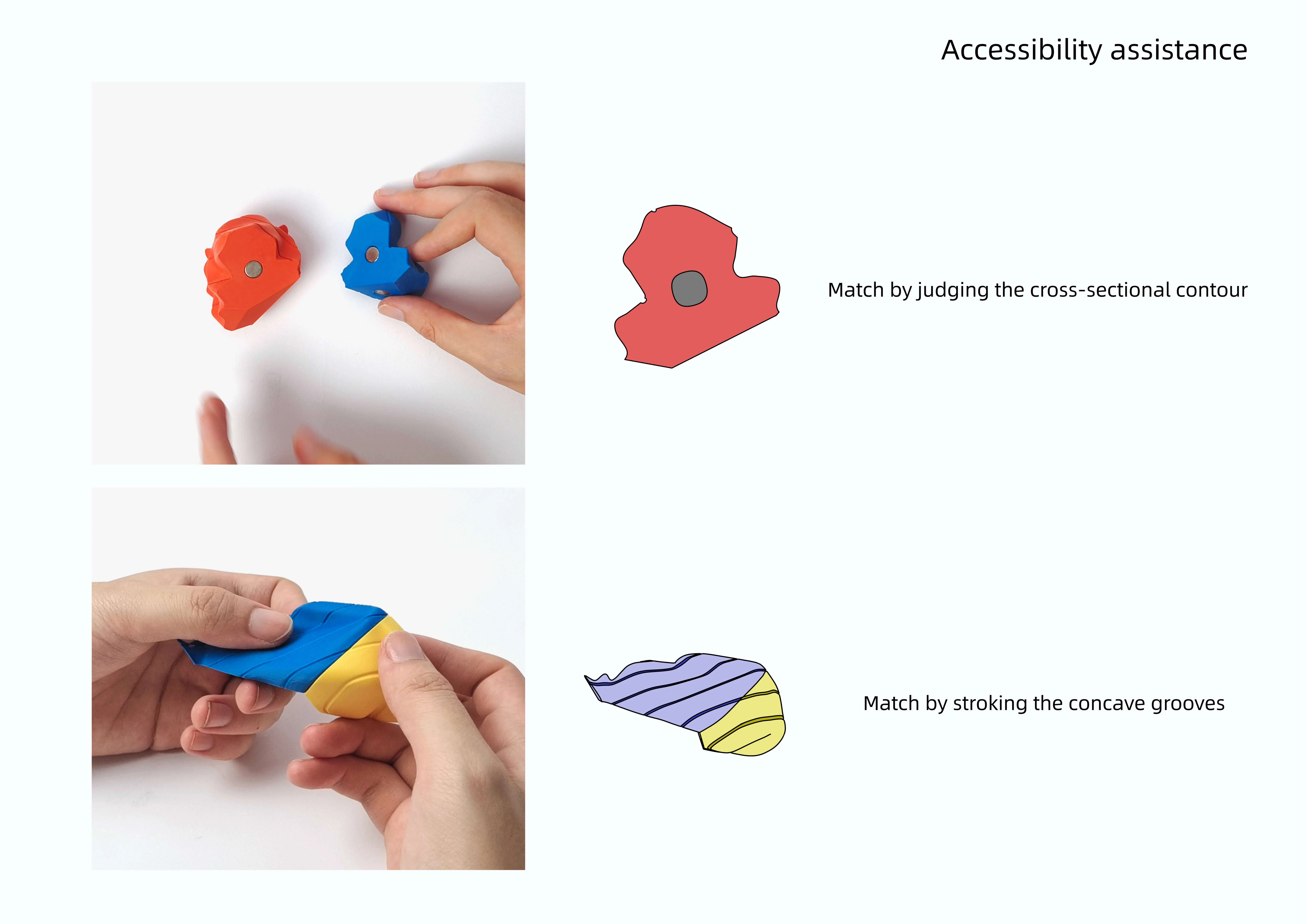
FlowBlock started from a simple question: how can a puzzle toy stay playful for sighted children while becoming usable and welcoming for visually impaired children at the same time? Rather than treating accessibility as an add-on, the project embeds tactile guidance, stronger connections, and adjustable difficulty directly into the toy structure.
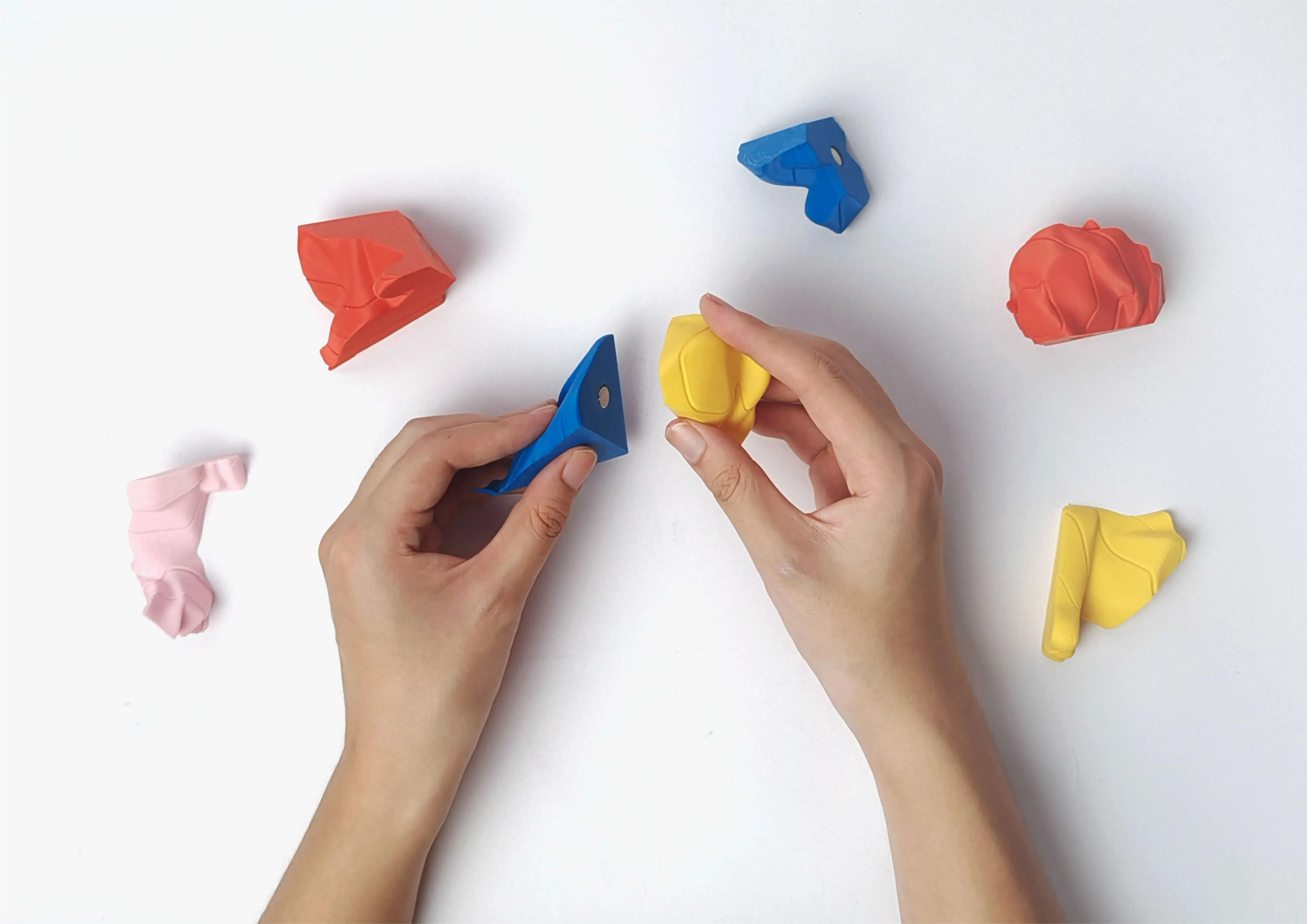
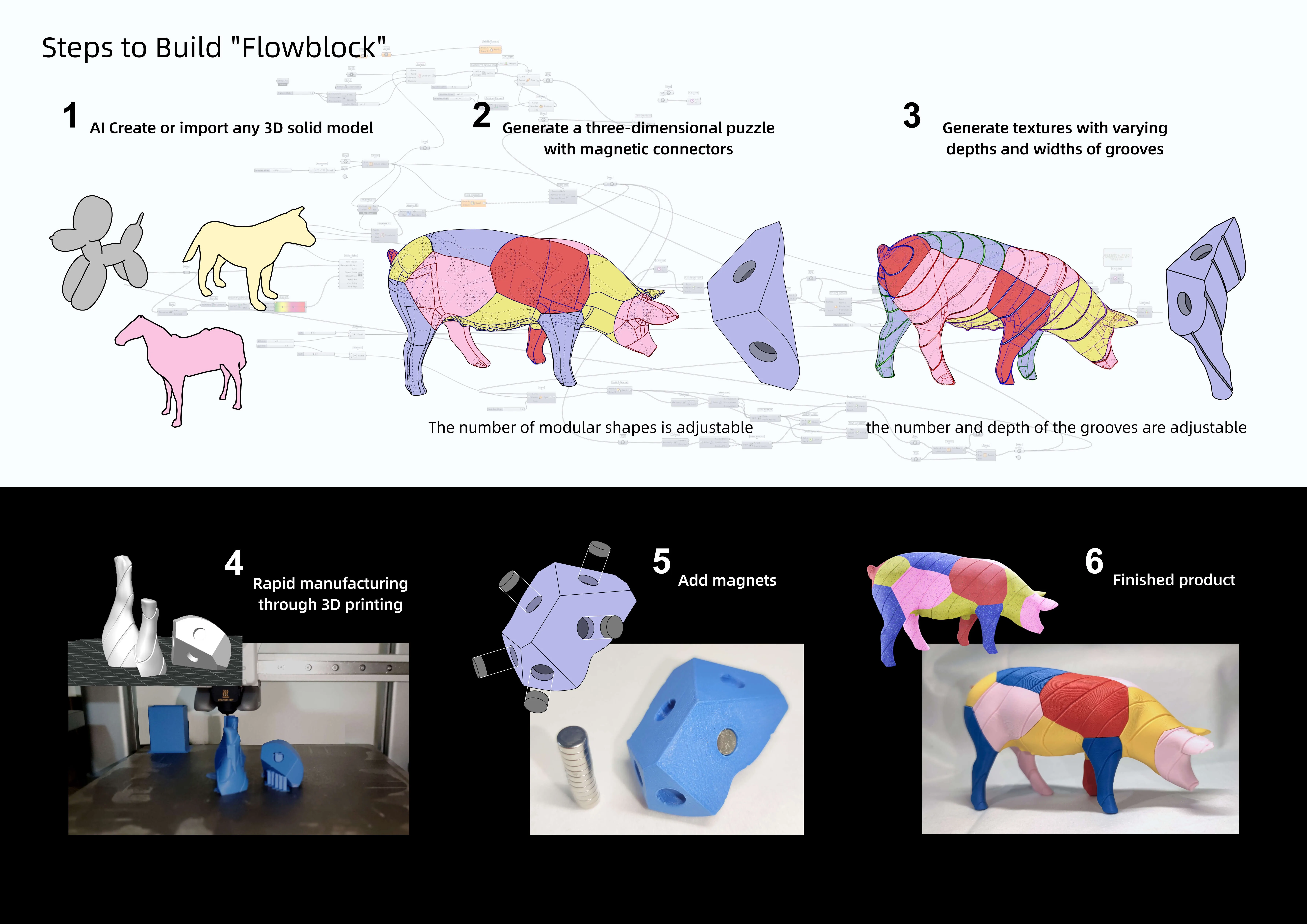
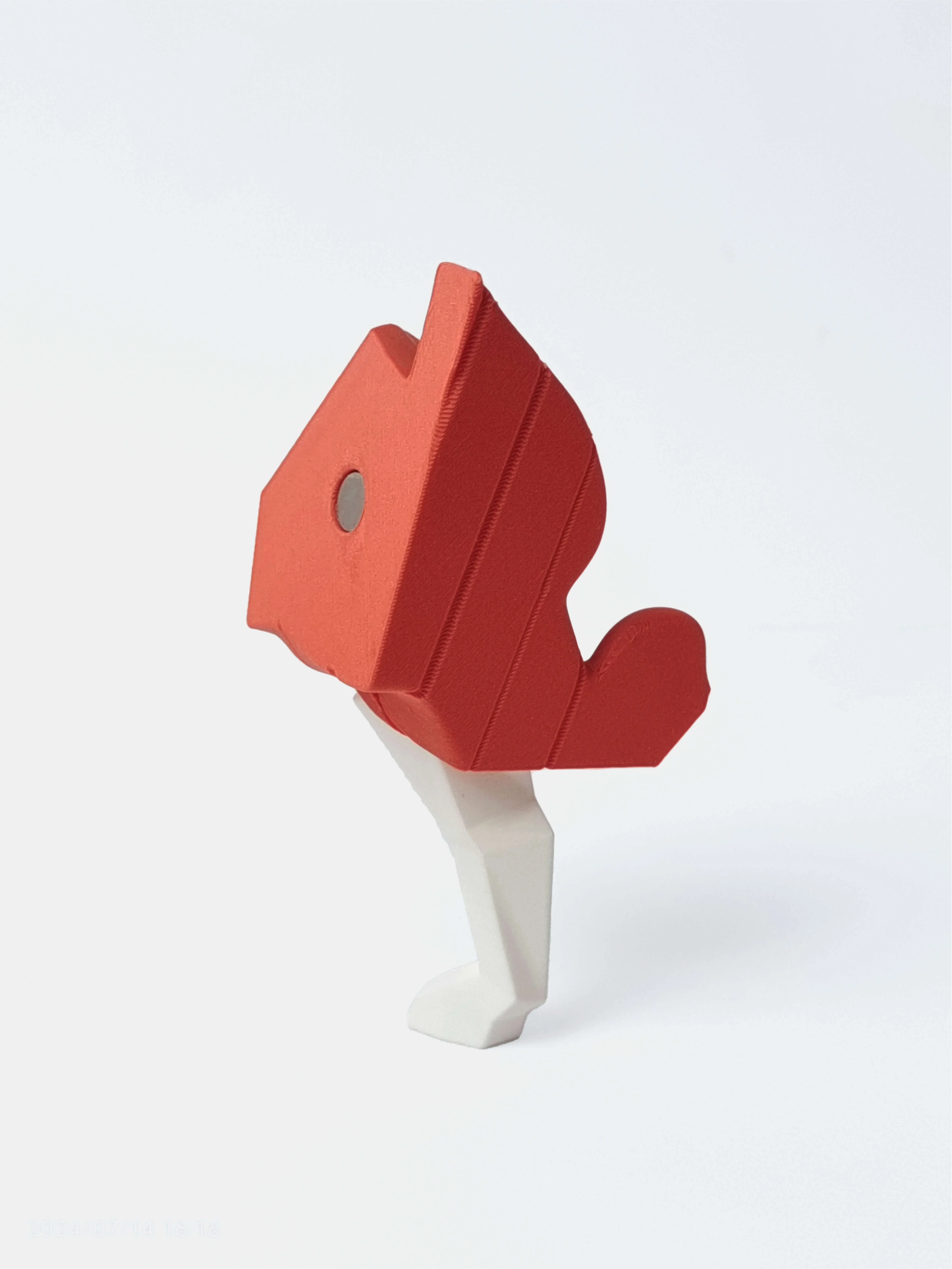
The design workflow combines parametric generation and rapid fabrication. A base solid can be imported or created first, then segmented into magnetic modules whose count and geometry can be tuned for different difficulty levels. Texture generation is equally parametric: the depth, width, and density of grooves can be adjusted so that each module remains recognizable by touch without becoming too hard to assemble.
Because the pieces are 3D printed and joined with magnets, the toy can be iterated quickly and assembled repeatedly without falling apart easily. In integrated classroom and exhibition settings, users can even convert AI-generated models into FlowBlock variants with the open-source workflow, then test the toy by hand, by touch, or with blindfolded collaboration.
The same object is designed to work as both a toy and a small decorative piece. Its magnetic back lets the modules attach to metal surfaces, so the toy can move between play, display, and co-creation scenarios without changing its core structure.
Related work
The tactile experience of 3D jigsaw puzzles in this project is further explored in haptic-zoo. FlowBlock can be read as an earlier toy-oriented exploration of the same inclusive-play logic: tactile recognition, role-balanced collaboration, and design for mixed-ability participation.